Saturday, March 6, 2010

Maude Smith Rundall- Two for the Road

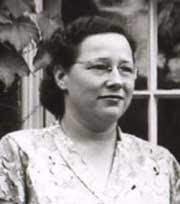
Mrs. Mahoney and Maude Smith Rundall in front of the Wassaic Schoolhouse


TWO FOR THE ROAD
By Gerry Holzman


Even though Maude Rundall and Herb Akleman were a highly unlikely pair, they remain forever linked in my memory because of their mutual disdain for the law.

Mrs. Rundall., a very proper married woman, could easily be spotted as she poked along the roads of Amenia in her 1939 gray Plymouth two-door sedan. Herb Akelman, the epitome of a post-World War II unmarried playboy, could usually be heard before he was seen as he roared around that same town in a red 1949 Oldsmobile convertible with dual exhausts.
Indian Rock board member, Ellen Walsh, got a letter back from Lynne Akelman (Herb Akelman’s daughter) Ellen sent her an Amenia Cookbook and Ellen tells us that Lynn loved the cookbook and shared the pictures,stories, and recipes with Herb. Herb will not own up to the car story, but does remember coaching the football team.


At the time of the incidents referred to above, he was tall, thin and in his early twenties. She was short, plump and in her middle fifties. He was the son of our local dry cleaner and she was the Superintendent of Schools. He pitched for the Town baseball team and was known to enjoy the post-game festivities even more than the game itself. She presided over a ladies church group and was often complemented on the beauty of her flower garden.

From this brief catalog of characteristics it is obvious that Herb Akelman and Maude Rundall had little in common. But, because of their crimes, separate crimes in which I was innocently involved, I am unable to remember one of them without being reminded of the other.

The memory link that connects them is quite clear—it is the Traffic Laws of the State of New York. They both violated one of these laws while I was a passenger, you might even say a potential victim, riding in their cars.

We'll start with Herb Akelman. His crime involved not only me but nearly half of the Amenia High School football team.

It was the afternoon of the Pine Plains--Amenia game and Herb, a volunteer assistant coach, had offered to transport some of us players to Pine Plains, a distance of about 15 miles. It was decided that he would drive the linemen in his red Oldsmobile convertible while our regular coach would take the remainder of the team in his plodding Ford station wagon.

In those days in Amenia, it was possible to transport an entire football team in two cars, not because cars were larger but because teams were smaller. Centralized school districts were not yet widespread in upstate New York so high schools with fewer than 100 students were quite common. If such a school wanted to play football, it usually was six-man football; the Amenia team, including substitutes, consisted of nine “brawny” boys.

Herb took four of us in his red convertible. As we tooled along rural Route 22 with the top down, Herb shouted back to us. "Any of you guys every go 100 miles an hour?" Without waiting for an answer, he continued shouting over the rapidly increasing wind, "Well, hang on tight because we’re gonna do it now."

I remember looking over his shoulder at the speedometer and saw that the needle was nearing 80. It moved past eighty and began inching toward the 90 mark. I turned away and looked out the back. Never have I seen a road disappear more rapidly--trees and pavement were merged into a gray-green blur. That blur mingled with the roaring wind to intensify what quickly developed into an exhilarating sense of motion. It was as if we were experiencing all the thrilling excitement of a roller-coaster ride without any of its stomach-flipping terror.

In the midst of all this came a jubilant shout from the front seat, "We did it!”

Herb took his foot off the accelerator, and the speedometer returned to a respectable fifty. It was over; we had broken the 100 mile an hour barrier--and the New York State traffic law.

I have absolutely no memory of any remaining part of the afternoon. I assume we arrived safely in Pine Plains and either won, lost or tied the game.

I've never gone 100 miles an hour since then although once I did nudge the 80 mark. But that wasn’t in a red convertible with the top down on a perfect fall day in upstate New York.

Now Maude Rundall's criminal act was certainly not as daring nor as willful as Herb's but I’m sure it was a serious motor vehicle violation nonetheless. It grew out of an eighth grade field trip to Hyde Park, a visit which took place took place shortly after President Franklin D. Roosevelt's death.

Mrs. Rundall and the Principal, Mr. Lonsdale (who also taught Geometry, Trigonometry, Chemistry and Physics) were the drivers on this round-trip of some sixty miles. Mrs. Rundall drove her old gray Plymouth, Mr. Lonsdale drove his relatively new Buick. And into those two automobiles. they somehow crammed fourteen eighth graders--each one of us carrying a good-sized lunch box, a notebook and an ink pen.

How they did it, I'll never know. Since it was before the days of seat belts and instant litigation, they probably saw no harm or worry in it. I clearly recall being in the front seat of Mrs. Rundall’s car with at least two other kids sharing that place of honor with me. And only God and Mrs. Rundall knew how many of my class mates were packed into the rear of that two-door gray Plymouth. As for Mr. Lonsdale, I’m sure his formidable background in Physics enabled him to successfully stuff great quantities of the remaining students into his relatively new Buick.


But somehow, we did manage to arrive safely and had a truly memorable visit to FDR"s ancestral home--I still clearly recall the grandeur of the house and the magnificent view of the Hudson it commanded. Most of us listened attentively to Mrs. Rundall who acted as our guide and we dutifully took notes in our loose-leaf notebooks with our ink pens. I even made a crude sketch in my notebook of a jeweled, ivory handled sword that had been given to FDR by an Arab sheik.

When we finished our tour, we had our promised picnic lunch on the gently slopping lawn. After lunch, all fourteen of us agreeably resumed our cramped places in the relatively new Buick and the old gray Plymouth and had an uneventful trip home. (I strongly suspect that my life-long interest in history was awakened by that visit)

But Maude Rundall, Superintendent of Schools for the Union Free District of Amenia, aided and abetted by Principal Howard Lonsdale, surely must have broken some significant Motor Vehicle Law. You simply can't safely put two adults and fourteen eighth graders, each one carrying a lunch box, a loose-leaf notebook and an ink pen, inside an old gray Plymouth two-door sedan and a relatively new Buick coupe

So, Herb Akelman and Maude Rundall, even though you stand before the bar of memory as indisputable criminals whose irresponsible acts clearly endangered the life of a young, innocent schoolboy, I forgive you. And with the wisdom granted me by the twin gods of Retrospection and Introspection, I thank you.

Two For The Road –(1,175 words)
©2007, Gerry Holzman
escarousel@aol.com

Indian Rock Schoolhouse Association Vice President, Ellen Walsh, sends this special message about the Akelman family. Stay tuned!

Monday, February 8, 2010

Alyce Proper at the Wassaic School


She was my teacher at the three room Wassaic School for grades 4, 5 and 6.

I feel she was a caring, friendly person always ready to give a helping hand and always ready with an interesting project for her students to do.
My favorite teacher was Alyce Proper.

I remember once being invited – along with several others - to her home for dinner. I think that was because we were her “special helpers” that year. I am sure it was her caring attitude and the interesting activities that made me want to be a teacher too.

My years in the Wassaic School generated many happy memories. The nature walks, the special lunch program, morning chapel, access to lots of books and the special holiday activities are just a few of them.
My time with Mrs. Proper was during World War II and those were hard economic times. Thus these outlets at school were important to me and to the children of Wassaic.

Doris Smith
February, 2010


Doris Smith attended the State University at New Paltz to prepare for her teaching career at Webutuck where she taught for over 40 years. She retired in 1995, but returned to work to do special consulatation in combining grades and academic intervention.


Saturday, February 6, 2010

Rhoda Lubalin's Aunt Helen

Welcome to Indian Rock Schoolhouse’s Year of the Teacher!
The Association has set aside 2010 as the year to recognize the teachers from the past and present who have worked so hard to share their knowledge with us. Members of the Schoolhouse Association have agreed to write their reminiscences, hoping those writings will strike a note of familiarity in all of you.


A Letter to Aunt Helen
Dearest Aunt Helen,

When you came to visit, as the door opened, an amazing aroma would waft from the bags you carried, conjuring up exotic places. Delicious. Mouthwatering. CHEESE! Not dull, orange American cheese, wrapped in plastic like a mummy. No. Enclosed artfully in heavy paper of some sort, with room to breathe. Often overtaken by, was that mold ? I always wondered what your fellow subway and bus travelers suspected. As you followed the cheese through the door, you generally wore a woven hat from some far off land or a garment that was somewhat unique.

How delicious were the treats you brought to my brother and me. Chocolate in the guise of gold coins, marzipan pretending to be flowers and vegetables. Pomegranates, avocados, artichokes and how to eat them. Silver jewelry from Mexico, of wondrous design. Your letters from foreign lands were long and descriptive as you sought to imbue us with a lust for travel. You rode a donkey into the Grand Canyon before it was fashionable and possibly would have thrust yourself over the Falls at Niagara if it had been legal.


As a teacher you were relentless in stressing education. You fervently wished that I speak French as fluently as you, so that when I went to France I might be mistaken for a native. You were a Spanish-English business secretary and could deliver a speech in German. You were in the process of mastering Russian. Language was, to you, a delicious mouth watering edible.

Earning you PhD with honors in French Literature while teaching elementary school, typing and proof- reading other candidates’ thesis, and tutoring every child who might need it. I marveled at your skills at the typewriter. Your fingers knew exactly where to go without your having to look at them. Of course, unlike mine, your spelling was impeccable.

What a compassionate person you were. Not only on a personal basis but seemingly for every oppressed or maltreated people everywhere. Marching in the May Day Parade was a must. Working for the newly formed Teacher’s Union in NYC. Signing petitions to right a wrong.

When we were little guys you purchased season tickets to the children’s concerts at Carnegie Hall. How delightful was that? The Sorcerers’Apprentice became a friend, and every character in Peter and the Wolf was a familiar personality long before Disney turned them into cartoons. The only thing that might deter you would be a bout with poison sumac, after a hike. But as soon as you recovered you picked up your binoculars and once again sallied forth into the woods and trails.


Aunt Helen, dear, what a constant teacher you were. I’m still trying to emulate you and live up to your expectations. Often it has been a supreme challenge. How did you do it all and with such joy and exhilaration?

Whatever door you knocked on or bell you rang, when asked “Who is it?”
you responded, “It is I !”
And so you were. “It is I”, is the perfect response in any language.

I love you. I miss you. Your niece Rhoda

P.S. It was only later on that I found out what else was in your bags. A newspaper or two, a change of underwear and a toothbrush. After all, one never knows when one might be invited to stay.


Rhoda Lubalin is an artist, a former art teacher and a "Lifelong Learner" in the Indian Rock Schoolhouse Association. She is a charter member who is present at every Arbor Day celebration, every fundraiser, every
picnic and participates with great enthusiasm just as her Aunt Helen would have had she been with us today.

Sunday, January 17, 2010

Jennie Cogan is remembered


By Gerry Holtzman

Whenever I think of her, my mind fills first with strong tones of black and gray, punctuated by brief traces of white. Out of those somber shadows, a tiny figure slowly emerges and I see Jennie Cogan once more.


She wears a severe black dress with some sort of simple white neckpiece. Her coarse grey hair is pulled back into a proper bun. There is no jewelry or any sort of decoration on her dress or on her person. Not a ring or pin or even a watch.

Her expression is equally serious. Accentuated by wrinkles, framed by steel-rimmed spectacles and unrelieved by makeup, it is a face of a woman who brooks no nonsense—the face of a woman who has a job to do and who is intent on doing it.

Holding an open book, she stands in front of a room-length, dusty blackboard which is covered with rows of precisely regimented phrases. Not quite five feet tall and shorter than all of her students, this iron-willed and determined woman is reading aloud. She is reading poetry to her 14 seventh graders.

My mind’s eye widens and I see myself in the row by the window. Although many of my classmates appear indifferent, I sit enthralled. The poem she is reading is Kipling’s “Danny Deever.” In fact, whenever I think of Miss Cogan, she’s always reading “Danny Deever.”

I can no longer hear her voice but I can clearly hear the words—I memorized them, not because we had to but because I fell in love with the sounds of those words, the pictures they evoked and the way the rhymes bounced off each other

“For they’re hangin Danny Deever, you

can ‘ear the Dead March play.

The regiment’s in ‘ollow square—they’re

Hangin him to-day.”

As a 12 year old, growing up in the tiny upstate village of Amenia (pop. 987, alt . 573), I wasn’t quite sure where India was or why Danny had “shot a comrade sleepin’” but I was fascinated by the rhythm and the incongruity of:

What makes the rear rank breathe so ‘ard!”

Said Files-on-Parade –

It’s bitter cold, it’s bitter cold “ the Color-

Sargeant said.

What makes that front-rank man fall down?”

Says Files-on-Parade.

“A touch of sun, a touch of sun,” the Color- Sergeant said.

She pronounced “said” so that it rhymed with “parade.” It became “the color-Sergeant sayed”. I don’t think Kipling intended those two words to rhyme so precisely but, to this day, whenever I read or recite that poem, I still find myself pronouncing “said” the way Miss Cogan did.

And she was, of course, Miss Cogan. Although her spinsterhood was an established fact, none of us in seventh grade knew where she actually lived. George Clinton claimed that she had a room across the street from the school in Mrs. Foley’s attic. But George was only in sixth grade and had been known to exaggerate in other situations, so most of us dismissed this as unreliable gossip. We preferred the more tantalizing theory that she lived somewhere in the school building, the most likely location being in the basement next to the furnace room. We made up some grand stories about her life down in that dingy basement and, being typical seventh graders, added some sex interest by including tales of wild assignations in the coal bin with Red O’Connor, the ancient school janitor.

In all honesty, during the eleven years I lived in Amenia, I can’t recall ever seeing Jennie Cogan anywhere but in her seventh grade classroom. Where she lived was, in fact, unimportant; her real home was in that classroom.

Like all elementary teachers in Amenia, she taught two grades which were both contained in a single classroom. The seventh grade sat on the window side of the room, the eighth grade sat on the door side. Promotion from grade seven to grade eight involved simply moving over two or three rows.

Now here’s the odd part of my memory of those days. Even though I spent both my seventh and eighth grade years with Miss Cogan, I have only two clear-cut recollections of her, one good and one bad. The good one was the morning she read “Danny Deever”, the bad one was the afternoon she whacked me in the hand with a ruler.

I don’t recall why she did it but I do remember that she took me completely by surprise and that it hurt like hell. When I looked up through tears of pain and humiliation, I saw this tiny woman in her drab black dress, standing over me, her ruler at the ready, glaring mercilessly and daring me to react. Although I outweighed her by a good forty pounds, I just sat and hung my head, ashamed at being singled out for punishment and frightened by the ferocity of her attack.

She probably hit me because I wasn’t paying attention. I did that a lot, particularly when I got into eighth grade. I had learned pretty much all the eighth grade work when I was on the seventh grade side of the room.

And that’s about all I remember of my two years with Jennie Cogan—the poem and the ruler.


Jennie Cogan Day 1956

About twenty years ago, there was some sort of tribute to her in Amenia but I didn’t hear of it until it was over. She must have been close to ninety by then.

I wish I had found out in time. I would have liked to have attended and to have thanked her for reading “Danny Deever” aloud. And, if I could have mustered up the courage, I might have even told her that I held no hard feelings about that business with the ruler.


Gerry Holzman has written for Yankee Magazine (Miss Cogan would be proud) and has granted us special permission to publish his memories of Jennie.

Today he runs the Empire State Carousel Museum Empire State located in Cooperstown at the Farmers' Museum (search farmersmuseum.org)-- Amenia is represented by an 16 inch hand-carved name plaque showing the village name and the image of a horse and a cow.

Watch for Gerry's next story of Mr. Lonsdale, Amenia High School former principal, and Herb Ackelman

Saturday, January 16, 2010

Mary Maroney Murphy- My Favorite Teacher was my Mom

Smithfield Schoolhouse with Mary Maroney, her class and two
neighborhood dogs who thought they were students too.

My favorite teacher was my mother, Mary Maroney Murphy.

Mom taught in a one-room schoolhouse for nine years before she married. After she married, she never stopped teaching. Just about everything she did was geared to teaching.
Cutting up a chicken was a biology lesson. As she gutted the chicken she would show you each part of the chicken. This was the heart, the lungs, the intestines, to us it was a little disgusting but we learned the parts of a chicken.
We were taught all about trees, flowers, vegetables and everything else in nature.
The most important thing she taught me was the love of reading. She didn’t have too much time to read herself, having six children to raise and a farm to run with my father but she always made sure I had books to read. She always warned me not to loan out my books as I might not get them back. She was right. A couple of times I did loan books and didn’t get them back. My mother always looked forward to getting back to reading after she retired. Sadly, she was not able to do this as she developed macular degeneration and was unable to read. She always regretted this.

We got to know our area by going for rides on Sunday afternoons. We would just take off and pick a road and explore. Many times we would end up visiting people we knew. Mom was a great one for visiting relatives. I am so glad she and Dad knew their relatives as we were able to compile a history of the family which today so many relatives, especially cousins enjoy reading about. It has kept us all in touch.
Another person who taught us a lot was our Uncle Chet Maroney. When you went for a ride with him you did not chatter in the car – you were to look out the window and take in everything that you saw. He always said that we could talk at home, now was the time to observe.
Two other people who had a hand in shaping my future were Mr. and Mrs. Hoose, Charlotte’s parents (Charlotte Hoose Murphy). When they went to concerts at Tanglewood they would take me along with the other their other child, Jane. That is where I developed my love of classical music. Charlotte and I still go to concerts and opera, able to enjoy them very much.


Mary & Bill Murphy on their 50th Wedding Anniversary

Favorite teachers don’t always have to be the ones who taught you in school. Sometimes the best teachers were the ones closest and dearest to you.

Catherine Murphy is a charter member of the Indian Rock Schoolhouse Association and the Treasurer of the Amenia Historical Society. Until her retirement she worked at the Amenia Bank, and in fact was the bank's first female officer.

Wednesday, November 11, 2009

DRAW WHAT YOU SEE


Indian Rock Schoolhouse art teacher, Tilly Strauss, is proud to present an occasional art class at the schoolhouse each year. She has worked with the community on projects creating fabric flags with symbols of the region, and using color paper to create patchwork billboards, and even to demonstrating the steps to making paper. You don't have to be an artist to have deeply satisfying experiences creating and participating in a project that gives voice to an idea.

Tilly loves working with kids and adults of all ages. She helps the student to learn techniques in creating illusions, using light and shade to draw everyday objects. She also enjoys working with emerging artists to find their path in the art world.


for more information, call 845-489-3264

Monday, November 2, 2009

Welcome Visitors from Kripplebush Schoolhouse

Members of the Board at Kripplebush: (left to right): Gail Hilsenbeck-Many,
Indian Rock's friendly greeter Bill Burke (in dunce cap), Joan Pugliese, Donna Miller,
Toni Countryman, Larry Scalla

Indian Rock Schoolhouse always welcomes visitors and representatives of other schoolhouses. We have met a number of interesting folks from near and far...and Kripplebush is far from Amenia.

Kripplebush is a small hamlet in Ulster County, across the Hudson River. These folks traveled for more than an hour to come to see our little 1858 schoolhouse, and to hear about all of you...our nearby friends.

Kripplebush is near Stone Ridge and High Falls. The schoolhouse is dated 1857 and looks very similiar to Indian Rock. The big difference is that the school building is not alone in the schoolyard. There is another two story Lodge Hall there which will be made into a museum on the first floor. They have no pavilion however.
And what did we learn from each other? We discussed programs in our respective schoolhouses, funding, hours and insurance issues. We enjoyed a picnic in the schoolhouse since it was so cold and damp outside that day - Oct 21st.
Indian Rock promised to visit their schoolhouse next spring to see their large building being finished. If you are interested in a field trip to Ulster County in 2010, let us know and we will
make sure you have directions.